
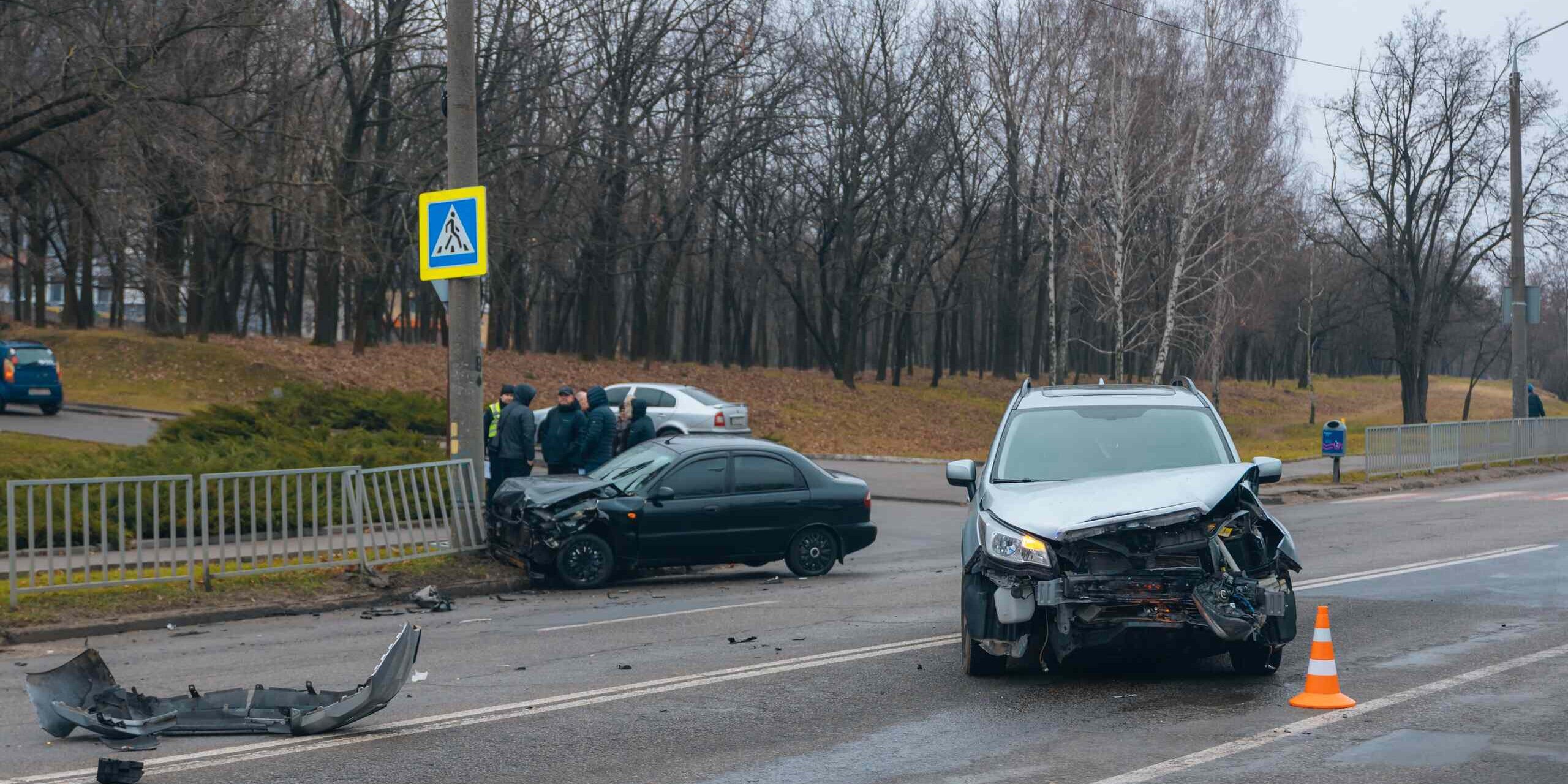
In Michigan, determining fault in a car accident is a two-part process. It involves a mix of legal rules, called statutory presumptions, for clear-cut situations like rear-end collisions, and a detailed, evidence-based investigation for more complicated crashes.
This evidence is all viewed through the lens of Michigan’s modified comparative negligence framework. This legal concept states that multiple parties could share some of the blame for the accident.
This immediately brings up a common point of confusion: “If Michigan is a No-Fault state, why does fault even matter?”
While it’s true that your own Personal Injury Protection (PIP) benefits cover your initial medical bills regardless of who caused the crash, fault is the key that unlocks other types of compensation. Your ability to sue the other driver for pain and suffering, wages lost beyond what PIP covers, and certain vehicle damages depends entirely on proving they were negligent.
Remember that the police report written at the scene is not the final word. These reports might contain errors, and an officer’s initial opinion on fault could be challenged. The true determination of liability typically requires a much deeper investigation to uncover the complete story of the accident.
If you have a question about a disputed accident report or liability claim, call Kajy Law Firm. We offer a free consultation and there is no obligation to work with us.
Key Takeaways for How Fault Is Determined in Michigan Car Accidents
- Proving fault is necessary for full compensation. Although Michigan’s No-Fault insurance covers your initial medical bills, you may only sue the other driver for pain and suffering if you prove they were negligent.
- Michigan’s 51% rule is a strict barrier. Under the state’s modified comparative negligence law, you are barred from recovering any money for pain and suffering if you are found to be 51% or more at fault for the crash.
- The police report is not the final word on liability. A thorough investigation that uncovers objective evidence like black box data, video footage, and physical debris from the scene is usually required to challenge an officer’s initial opinion and establish who was truly at fault.
The No-Fault Myth: Why Liability Still Matters
Many drivers in Michigan believe No-Fault insurance means no one is ever held legally responsible for a collision. Instead, think of Michigan’s auto insurance laws as having two separate lanes:
- First-Party Claims (No-Fault/PIP): This is the No-Fault part. After a crash, you turn to your own insurance company to pay for your medical expenses and a portion of your lost wages through your PIP benefits. In this lane, fault is almost always irrelevant. The goal is to ensure you get immediate medical care without having to wait for a lengthy fault investigation.
- Third-Party Claims (Tort Liability): This is where you sue the at-fault driver. This type of claim is entirely based on fault. It is the only way to recover damages for things your PIP benefits don’t cover, such as pain and suffering (known as non-economic damages), wage loss that exceeds the statutory caps, and other financial losses.
Essentially, proving fault is the gatekeeper. If you cannot establish that the other driver’s negligence caused the crash, the gate to a third-party claim remains closed. You may access your PIP benefits, but you lose the ability to hold the other driver accountable for the full scope of the harm they caused.
Michigan’s Modified Comparative Negligence: The 51% Rule
Car accidents are rarely black-and-white events where one driver is 100% to blame. Life is more complicated than that. Maybe one person was texting, but the other was speeding. Perhaps one driver failed to yield while the other had a broken taillight. This is where many people worry that if they are found even slightly at fault, their entire case is lost.
Michigan law anticipates these gray areas. The specific rule is laid out in Michigan Compiled Laws Section 600.2959.
Here is how it works:
- The 51% Bar: The law states that you may only recover non-economic damages (like pain and suffering) if your percentage of fault is 50% or less. If a jury determines you were 51% or more responsible for the accident, you are completely barred from receiving this type of compensation.
- Comparative Reduction: If you are found to be 50% or less at fault, you could still recover damages, but your final award will be reduced by your percentage of fault.
This rule creates a high-stakes battleground. An insurance adjuster’s primary goal in a third-party claim is to shift as much blame as possible onto you. Pushing your assigned fault from 49% to 51% means the difference between them paying a fair settlement and paying you nothing at all for your pain and suffering. This is why having a robust investigation on your side is necessary to counter their arguments.
The Evidence That Determines Fault
At Kajy Law Firm, we build a case by looking at a hierarchy of evidence that tells the true story of what happened:
- Electronic Control Modules (ECMs): Also called a car’s black box, the ECM records critical data in the seconds leading up to a crash. We may retrieve information on speed, braking, acceleration, and steering, providing an unbiased account that cuts through the he-said-she-said arguments.
- Video Footage: Dashcams, doorbell cameras from nearby homes, and surveillance systems from local businesses might capture the entire incident. This evidence is incredibly powerful, but it’s also fragile. It is frequently deleted or overwritten within days, which is why you must act quickly to preserve it.
- Physical Evidence at the Scene: The location of vehicle debris could pinpoint the area of impact. The length and pattern of skid marks reveal how fast a vehicle was traveling and when the driver reacted. The crush damage to the vehicles themselves could show the angle and force of the collision.
An attorney early on ensures that necessary steps, like sending legal notices to preserve video footage, are taken before it’s too late.
Statutory Presumptions: When the Law Assumes Fault
In certain common accident scenarios, Michigan law creates a presumption of fault to simplify the determination of negligence. This doesn’t mean the case is automatically closed, but it does mean one party has the initial responsibility of proving they were not at fault.
Rear-End Collisions
Under MCL 257.402, there is a legal presumption that the driver who strikes the vehicle in front of them is at fault. The law calls this prima facie evidence of negligence. Simply put, the court assumes the rear driver was either following too closely or not paying attention.
However, this presumption may be challenged. A skilled attorney could overcome it by proving certain conditions existed. For example, if the lead car:
- Had non-functioning brake lights.
- Made a sudden and unexpected stop for no reason.
- Suddenly reversed into traffic.
- Was illegally stopped or parked in an active lane of travel.
Traffic Citations and Left Turns
Receiving a traffic ticket for a civil infraction like failure to yield is strong evidence of negligence, but it’s not absolute proof of fault for the civil injury claim. We have successfully handled cases where our client was ticketed at the scene, yet our investigation proved the other driver was primarily responsible for the crash.
Drivers making a left turn have a significant legal responsibility. They must yield the right-of-way to all oncoming traffic. It may be very difficult to shift blame to the driver who was proceeding straight unless there is clear evidence that they were driving at an excessive speed or ran a red light.
The Mini-Tort Exception: Property Damage and Fault
One of the most common points of confusion in Michigan’s No-Fault system relates to vehicle damage. Generally, you cannot sue an at-fault driver to pay for repairs to your car; you are expected to rely on your own collision coverage. However, there is a significant exception known as the Mini-Tort.
The Mini-Tort law, outlined in MCL 500.3135(3)(e), allows you to recover money from the at-fault driver’s insurance company to help cover out-of-pocket vehicle repair costs. Here’s what you need to know:
- The Limit: You may recover up to a maximum of $3,000 from the at-fault driver. This amount is intended to cover your insurance deductible or, if you don’t have collision coverage, to help pay for the repairs themselves.
- Fault Matters: Your ability to collect a Mini-Tort payment is entirely dependent on fault. The law applies the same modified comparative negligence standard. Your maximum recovery would be reduced by your percentage of fault. If you are more than 50% at fault, you are barred from recovering anything.
The Mini-Tort claim is frequently the first dispute a person handles after an accident. How fault is decided here can set the tone and precedent for the much larger personal injury claim that may follow. We advise getting it right from the start.
Special Scenarios: Weather, Multi-Car Pileups, and Empty Seats
Fault determination becomes more difficult when unusual factors are involved.
Winter Weather and the Sudden Emergency Doctrine
Drivers who cause a crash on icy roads sometimes try to use the Sudden Emergency Doctrine as a defense, claiming that unexpected black ice caused them to lose control. However, Michigan courts have generally taken a skeptical view of this argument.
The law expects drivers to adjust their speed and driving habits to match the weather conditions. Driving too fast for conditions is negligence, and citing predictable winter weather is rarely a successful defense for an at-fault driver.
Chain Reaction Crashes
Assigning fault in a multi-car pileup requires a meticulous, car-by-car analysis. The driver who started the chain reaction by hitting the first car is not automatically responsible for every subsequent impact.
For instance, Car A might be 100% liable for rear-ending Car B. But if Car D was following too closely and couldn’t stop in time, slamming into Car C, then Car D’s driver could be independently negligent for that specific collision.
Claims for Passengers
Remember that passengers are almost never assigned any fault in an accident. An innocent passenger in a vehicle has the right to file a claim against the driver of any vehicle that was negligent. Even if the driver of the car they were in was 90% at fault and the other driver was only 10% at fault, the passenger can typically pursue a claim for their injuries against both drivers’ insurance companies.
FAQ for Fault Determination in Michigan
Can I still receive No-Fault medical benefits if I caused the accident?
Yes. Your Personal Injury Protection (PIP) benefits are paid by your own insurance company regardless of who was at fault. There are only very narrow exceptions, such as being injured while intentionally trying to harm yourself or while operating a stolen vehicle.
Does my insurance rate go up if the accident wasn’t my fault?
Generally, Michigan law prohibits insurance companies from raising your rates or adding surcharges for accidents where you were not substantially at fault (more than 50%). However, having the “not at fault” status clearly and officially established is key to protecting yourself from unfair rate hikes.
What if the other driver was drunk but I was speeding?
his is a classic example of comparative negligence. The drunk driver’s actions constitute gross negligence and would likely account for the vast majority of the fault. However, your speeding would also be considered a contributing factor. A jury would assign a percentage of fault to each driver, and your final settlement would be reduced by your percentage.
How long does the insurance company take to decide who is at fault?
This can vary from a few weeks to several months, depending on the difficulty of the crash. Be aware that insurance companies sometimes make quick preliminary fault decisions to try to close files quickly. Never accept an early denial of your claim or an unfair fault assessment without first seeking a legal review of your case.
Don’t Let a Flawed Fault Determination Cost You Your Future
Being assigned even a small percentage of fault in a Michigan car accident directly impacts your right to be compensated for injuries that could affect your health, your career, and your family’s financial stability for years to come.
Insurance adjusters and even police officers are human; they work with limited information and sometimes miss key evidence. Their initial assessment is not the final word, and you have the right to challenge a decision that unfairly places blame on you.
The Kajy Law Firm’s practice focuses on conducting the deep, detailed investigations necessary to uncover the truth. We find the missing witnesses, secure the video evidence, and analyze the physical data to build a clear and compelling case that accurately reflects what happened.
Don’t try to challenge an insurance company’s fault determination on your own. If you need clarity on your accident case, call Kajy Law Firm today for a free, no-obligation consultation.